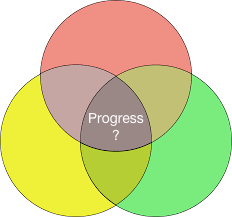
 It has been a long time since British politics was in such a confusing state. The old certainties have collapsed and there is doubt whether Labour really represents working people or that the Conservatives represent traditional shire interests. So it is perhaps unsurprising that the most hotly contested political events in recent years have been the Scottish and EU referendums with their simple straightforward choice, Yes or No, In or Out. But with the ascendancy of right-wing libertarianism allied to an aggressive alt-right populism, it is understandable that opposition parties should rethink their strategy.
The defeat of Zac Goldsmith in the Richmond by-election was an event which I warmly welcomed. The argument that he should be supported as a man of integrity in triggering the by-election seemed small compensation set against a London Mayoral campaign where Goldsmith at times mounted deeply unpleasant racist attacks which helped feed a growing climate of intolerance. But the issue I have is with the use of the term Progressive Alliance to describe the coalition of Liberal Democrat, Green and Women’s Equality Party which triumphed in Richmond. Progressive Alliance can only serve to add to the fog of confusion regarding the platform on which the candidates are standing. Missing from the coalition was the Labour Party, apparently divided as to the strategic advantage of entering into pacts with other parties.
The Danger: Ineffective Liberalism and a Discredited Centre-Ground
So what is the problem with Progressive Alliance? To be a progressive you must advocate improvement or reform, as opposed to working to maintain the status quo. But improvement or reform can take many different paths and even when limited to the anti-Zac parties there will be a multitude of approaches as implied by the use of ‘Alliance’. In Richmond the Progressive Alliance very effectively mobilized a strong anti-Brexit feeling on the part of the electorate. But remaining in the EU currently represents the status quo and even arguing the case that remain represents a progressive position leaves the problem of how to deal with the broader disaffection with institutions such as the EU. It is argued (such as in this letter by Green Party co-leader Caroline Lucas) that the core principle of a Progressive Alliance is the election of as many candidates as possible who support a change in the voting system to Proportional Representation. PR really does represent a progressive position which aims to end a deeply unrepresentative system which gives enormous power to a single party agenda based on the wishes of a minority of voters (37% voted Conservative in 2015). But in fact PR is also the aim of UKIP, a major player in the pro-Zac (no pun intended) coalition.
Continue reading “A Progressive Alliance; Short Term Expediency, Not a Long Term Prospect”
 New Leveller