The enemies of freedom have always charged its defenders with subversion. And nearly always they have succeeded in persuading the guileless and well-meaning.
Karl Popper: The Open Society and its Enemies
Since Theresa May was appointed Prime Minister in the summer of 2016 we have seen an unprecedented attack on citizens and organisations legitimately voicing opinions counter to Government policy. There was the spectacle of Theresa May claiming from the steps of Number 10 that anyone opposing her view of Brexit was a ‘saboteur’. This was followed by the horrendous traducing of Gina Miller for exercising her legitimate right to ask the judiciary whether the Government was acting within its remit to bypass Parliament when triggering EU Article 50. Judicial Review is a fundamental freedom which everyone enjoys.
Now we have Conservative MP Chris Heaton-Harris, a Government Whip no less, demanding that Universities divulge the names of any of their academics working in the field of humanities who may lecture on the possible implications of Brexit. This chilling and dangerous move is the most recent of Government attempts to stifle academic examination of their policies. During the Brexit campaign there was Michael Gove attempting to trash the value of expert opinion. A little earlier in 2016 it was revealed by the Observer newspaper (during February in this article) that the Cabinet Office was imposing new rules from May 1st 2016 which would effectively censor recipients of Government grants from using their results to lobby for a change in policy. After a high profile protest by senior scientists, including the Astronomer Royal Sir Martin Rees, the Government partly backed down (report here).
The Heaton-Harris attack bears a depressing similarity with the others. The victim whether it be Gina Miller, an economics academic or simply a citizen exercising their rights of free expression, is accused of dark motives, of sabotage or subversion. The implication, often made explicit, is that the accuser, unlike the victim, is patriotic, democratic and the true defender of liberties.
Aside from the fear of persecution which this engenders, the general intellectual climate which this is producing is complete cynicism and disrespect for open debate. Attacks on academics damages a belief in independent inquiry and conviction arrived at by rational means. This means that knowledge becomes a political issue to be decided by Government rather than investigation and debate.
Heaton-Harris has been condemned and described as an ‘idiot’ for demanding information from University Vice-Chancellors. But such ignorance cannot be accaptable for a democratic representative and Government Whip. It is not often that you will find me mentioning classical liberal theorist F.A Hyek in this blog But in this case I think he was absolutely correct when he wrote in The Road to Serfdom (in a chapter entitled the End of Truth):
That in the disciplines dealing directly with human affairs and therefore most immediately affecting political views, such as history, law, or economics, the disinterested search for truth cannot be allowed in a totalitarian system, and the vindication of the official views becomes the sole object, is easily seen and has been amply confirmed by experience.
It is a mark of just how far liberal voices have been sidelined in the modern Tory party to be replaced by an aggressive authoritarian conservatism. The fact that Heaton-Harris has not been relieved of his post is a testament to this fact.
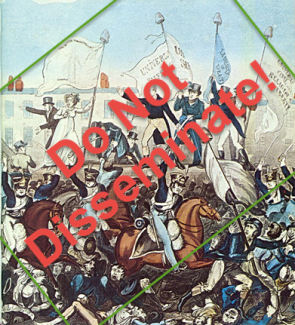 When I was 11 years of age I had a wonderful history teacher. We studied the Anglo-Saxons and he did his best to give us an idea of what it was like to live about 1,500 years ago. It was compelling stuff but sadly it did not last. By age 14 I had given up on history, my early inspirational teacher being replaced by a boring and lifeless one who made us learn facts and dates by rote. It would be many years before I started to realise that to understand our present situation we need to understand where we have come from. I also realised that the history I wanted to grasp was not the history taught in schools or on the TV and there were few monuments to the events I found significant. I learned quickly about the way in which the establishment controls the historical narrative. I wanted to understand the fight to be a free citizen, the struggle for liberty, the campaigns for equality and a fair wage. But the overwhelming narrative was about monarchs, wars, generals and empires. It was easy to find out why the Duke of Wellington was a hero of Waterloo, but not that he was despised in many places and physically attacked on the streets for his repressive attitude and support for the 1819 carnage in Manchester at the
  New Leveller