For much of our history property ownership was an essential prerequisite to exercise your full rights as a citizen, but now you need an internet connection! To be a citizen can mean a variety of things. At its most basic it is merely a synonym for being a national of a particular country, thus possessing a right of abode. As a consequence of mass migration the question of what it means to be a citizen in this sense is of burning importance at the current time. But the broader concept of a citizen is actually very old, dating back to the ancient Greeks and is closely related to the idea of freedom and political agency.
Later, being a citizen to the ancient Romans meant not being a slave and this idea carries potent implications to the present time. In Renaissance Europe the idea of a citizen was linked military service for your city or state, where you may be expected to serve part-time in a militia or reserve force. As today, much debate took place in seventeenth century England as to the definition of a citizen and whether everyone should enjoy the same rights. The highest level almost always involved the ownership of substantial property and conferred Parliamentary voting rights. At the bottom and often regarded as foregoing citizenship were the poor who received alms or worked for wages (much less common in pre-industrial societies) The emerging idea of a citizen being of independent means is an important one and is acutely relevant today. Crucially, very few definitions at that time included women, unless they were also property holders by widowhood or inheritance.
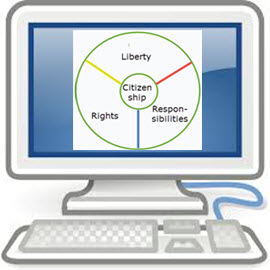
If citizen is a word plagued by ambiguity then the associated citizenship suffers similar problems. Again, it could mean simply the state of being a citizen, but that gets us little further forward. It is more useful to consider citizenship as a process; of how we take our part as an active member of society. On that basis, citizenship implies that we have various rights and responsibilities, some of which may be withdrawn permanently or temporarily. For example we may consider prisoners as being citizens, but of lesser kind without some rights, such as the ability to vote in elections (though this is being reviewed). In general, as societies developed, so the concept of the rights possessed by a citizen have similarly evolved. In modern western democratic states citizenship brings with it not only a right (or responsibility) to vote, but rights to welfare, education, health care, security etc. This means the necessity for the state to ensure that its people possess the knowledge, skills and means to take advantage of their rights and responsibilities. Moreover citizens must have the confidence to use the knowledge and skills effectively. The responsibilities of citizenship have also evolved, becoming ever more complex. If we take a wider view of citizenship as being actively involved in politics (in its broader sense, not just party based) the situation is similarly involved with a plethora of campaigns which may easily straddle international and even continental boundaries.
Continue reading “Modern Citizenship Means Being Online” →


 New Leveller