The death of one of the richest men in the UK, Gerald Grosvenor the 6th Duke of Westminster, earlier this year (August 2016) threw into relief the gross inequality of wealth in the UK. The Grosvenor estate was established by Hugh Ardley in the 17th Century, who was no shrinking violet as can be seen from this ‘way to riches’ biography of his life. The outrageous aspect of the Grosvenor estate is that via a system of trusts the Estate pays almost no Inheritance Tax! It is a strong temptation to call for the state to simply seize the Grosvenor Estate and bring it into public ownership. While I am all in favour of abolishing hereditary titles, such a call actually reveals a much more widespread and deepseated problem with in our current neo-libertarian approach to economics, that of exactly who controls the means of investment. Supposing we did in fact ‘nationalize’ the Grosvenor Estate. That means the Government will possess over £9bn worth of property which will be practically worthless unless the assets are sold. So an equally important question is not only who controls the assets but who controls the investment potential generated by those assets. Clearly by avoiding taxes the Grosvenors themselves are actually enjoying the full investment potential of the estate.
Investigating the ownership of investment potential as well as the assets reveals the true extent of the gross unbalanced nature of our society. An example from a different domain is the contract for controversial nuclear power station Hinckley Point C. The construction of an as yet unproven model of power station is being funded by the French EDF power company but only on the basis that the UK electricity consumer (yes us again) buys the electricity at much above market rates for decades to come. But what if the unproven reactor design requires extensive and expensive modification? Will the government really hold EDF to its contract and possibly bankrupt the company? The substantial potential returns on the installation are privatised while it appears that the risk is, once again, borne by the public.
But there are other models of investment, some of which operate in the United States which is often held up as a paragon of private owner capitalism. A closer view reveals a more complex interaction of public and private ownership, a particularly interesting example being the New York Power Authority. The NYPA is a publicly owned power generating company in New York State which claims to be one of the most efficient generators in the US, tasked with developing renewable sources and providing cheap power to not-for-profit organisations and small businesses. But we can go further than this with the massive potential in Pension Funds and other schemes. Open up these funds to the control of their investors and a more democratic system of investment becomes possible. The question of the democratization of investment potential is every bit as important as who actually controls wealth with which, of course, it is inextricably linked.
When the history of our present time is written the Iraq War may not be viewed as the most significant ‘legacy’ of Tony Blair for the people of the UK itself. Instead, historians may focus on the policy of devolution and the dangerously unstable constitutional arrangement. Aside from the unresolved and patently unfair West Lothian Question we have a Scottish Parliament which can legislate unless specifically prevented from doing so, a Welsh Parliament which can only legislate unless specifically authorised to do so, and a House of Lords where Church of England Bishops can affect legislation for everyone! Devolution has left a complete mess and singularly failed to achieve Blair’s goal of heading off the momentum for Scottish independence. Part of the problem is an archaic notion of Parliamentary sovereignty which is contributing to a justifiable feeling amongst the people that our Governmental and administrative systems have a lack of control and accountability. While deriving from an understandable impulse, the addition of a specific Parliament for England will only serve to muddy the waters of accountability even further. The whole idea of devolution should be seen as a mistake and a new way urgently sought out of the mess.
Until now the people of the English regions have shown little enthusiasm for federalism within England itself, largely due to the unpalatable and ‘take or leave it attitude’ of Westminster politicians anxious to be seen to be doing something rather than possessing a real reforming zeal. But that is changing and England itself may be starting to show the way forward for our ridiculous constitution. Significant powers are being allocated to groups of local authorities in areas such as Greater Manchester and the West Midlands and prominent politicians are showing an interest in regional governance. Presently, it is not intended to create new assemblies as with London, with mayors comprising the sole directly elected component. To some extent, however, the new mayoralties resemble embryonic regions, or more realistically considering their focus, city-states. To a civic republican the current model is unsatisfactory (I do not want elected monarchies!) but, suitably evolved, it could provide the seed for a properly accountable federal system.
It is possible that Prime Minister Theresa May is the luckiest British politician of our time. She seems to have completely dodged any responsibility for the debacle surrounding the instigation of the Independent Inquiry on Child Sexual Abuse (IICSA). The fact that May has emerged politically unscathed with a reputation of businesslike competence is nothing short of remarkable, due in no small part to the Labour Party obsession with its leader rather than providing opposition. Needless to say. the people who have been forgotten appear to be the people in desperate need of closure, the abuse survivors.
A Weak Notion of Independence
As neither an abuse victim myself nor someone who has experience of supporting victims I am not qualified to begin to comment on the specifics this most sensitive of areas. But looking at the IICSA in an organisational context is a different matter and much is revealed about the attitude of the authorities, which casts doubt on a succesful outcome. I start by encouraging you to view the IICSA website. Looking at the About Us section we find the following statement:
Being independent means the Inquiry is not part of government and not run by a government department.
This seems a particularly weak interpretation of ‘independent’. It should go much further with a statement that it is neither subject to government influence nor censorship. The notion of independence is further weakened since much of the suspicion falls on establishment institutions which are outside the technical boundaries of Government such as the Police, Lords, the Church of England and the Judiciary. To this list can be added those members of the Royal Family aside from the Queen and Prince of Wales who are not part of the Government but most certainly part of the establishment. I shall return to this issue later.
The anniversary of two events of primary importance in our radical history occur in August; the birth of poet Percy Bysshe Shelley on the 4th (in 1792) and the Peterloo Massacre in Manchester, England on the 16th (in 1819). Last week my thoughts Shelley’s great Poetical Essay on the State of Things was published on openDemocracy and it is a suitable moment to consider the relevance of another of his great works inspired by events in Manchester, the Masque of Anarchy (you can read it here). Like the openDemocracy article, this post is neither intended as a literary study of Shelley’s work nor an account of the origins of Shelley’s radical opinions. There are many people far better qualified for this task and I can only draw your attention to two examples, Paul Foot’s excellent article from 2006 or the materials on this fascinating blogsite by Graham Henderson. In both my openDemocracy article and the present post I have two aims. Firstly to outline my claim to Shelley as part of the tradition with which I identify and secondly to assess the importance of Shelley’s work and the invaluable lessons it has for us now.
Although popular pressure had been building for reform since the start of the French Revolution in 1789, economic depression and high unemployment following the end of the Napoleonic Wars in 1815 intensified demands for change. In 1819 a crowd variously estimated at being between 60,000 and 100,000 had gathered in St Peters Field in Manchester to protest and demand greater representation in Parliament. The subsequent overreaction by Government militia forces in the shape of the Manchester and Salford Yeomanry led to a cavalry charge with sabres drawn. The exact numbers were never established but about 12 to 15 people were killed immediately and possibly 600-700 were injured, many seriously. For more information on the complex serious of events, go to this British Library resource and this campaign for a memorial.
Shelley was in Italy when news reached him of the events in Manchester and he set down his reaction in the poem Masque of Anarchy (sometimes Mask of Anarchy) which contains the immortal lines contained in the title of my post. The work simmers over 93 stanzas with a barely controlled rage leading to a call to action and a belief that the approach of non-violent resistance (an approach followed by Gandhi two centuries later) would allow the oppressed of England to seize the moral high ground and achieve victory. Such was the power of the poem that it did not appear in public until 1832, the year of the Great Reform Act which extended the voting franchise.
Anarchy – Chaos and Confusion as a Method of Control
An excellent place to start thinking about the relevance of the poem is with the eponymous evil villain, Anarchy. He leads a band of three tyrants which are identified as contemporary politicians, Murder (Foreign Secretary, Viscount Castlereagh), Fraud ( Lord Chancellor, Lord Eldon) and Hypocrisy (Home Secretary, Lord Sidmouth). But Shelley widens the cast of villains in his description to include the Church, Monarchy and Judiciary.
Last came Anarchy : he rode On a white horse, splashed with blood ; He was pale even to the lips, Like Death in the Apocalypse.
And he wore a kingly crown ; And in his grasp a sceptre shone ; On his brow this mark I saw— ‘I AM GOD, AND KING, AND LAW!’
The promotion of anarchy with its attendant fear of chaos and disorder was one of the most serious accusations which could be levelled at authority. The avoidance of anarchy was also a concern of English radicals ever since the Civil War in the 1640s and Shelley was making the gravest personal attack with his explicit individual accusations. But Shelley’s attack is pertinent, the implicit threat of confusion and chaos to subdue a population for political ends is something which we experience today. The feeling of powerlessness which can result from an apparently confusing and chaotic situation is something which the documentary filmmaker Adam Curtis has termed ‘oh dearism’. In our own time he has identified recent Chancellor of the Exchequer George Osborne as deliberately using such a tactic. Likewise the Labour Party leader Jeremy Corbyn has been variously accused of being a threat to national security or a threat to the economy .
The 1819 Peterloo massacre occurred at a time of hightened external tension with fear that the French revolution would spread to Britain. The fear was not unfounded and various groups around the country emerged with such an intent, in many cases inspired by Tom Paine’s The Rights of Man which the Government had been trying to unsuccessfully suppress. The existence of an external threat combined with homegrown radicals was explicitly used as a reason for a policy of political repression and censorship. Likewise today an external threat, Islamic State combined with an entirely separate perceived internal threat (employee strike action) has been cited as justification for a whole range of measures including invasive communication monitoring (so called ‘Snoopers Charter’) without requisite democratic controls and a repressive Trade Union Bill seeking to shackle the ability of unions to garner support and carry out industrial action.
The Nature of Freedom
The nature of freedom is a problem which has bothered both libertarians and republicans for generations. In Masque of Anarchy where Shelley is enumerating the injustice suffered by the poor he clearly defines freedom in terms of the state of slavery, a core republican premise:
What is Freedom? Ye can tell That which Slavery is too well, For its very name has grown To an echo of your own
The essence of freedom which has financial independence as a core component is clearly articulated over a number of stanzas, starting with:
‘’Tis to work and have such pay As just keeps life from day to day In your limbs, as in a cell For the tyrants’ use to dwell,
‘So that ye for them are made Loom, and plough, and sword, and spade, With or without your own will bent To their defence and nourishment.
In our own time freedom is frequently constrained by insufficient financial resources as a result of hardship caused by issues such as disability support cuts, chronic low wages and a zero-hours contract society. Shelley would have no problem with identifying Sports Direct owner Mike Ashley, playing with multimillion pounds football clubs while his workforce toil in iniquitous conditions for a pittance; or Sir Philip Green impoverishing British Home Stores pensioners to pile up a vast fortune for his wife in Monaco. Disgustingly the only thing we need to update from Masque is the cast of villains, the substance is unchanged!.
Non-Violent Resistance – A Way Forward
I pointed out that in the 1811 Poetical Essay, Shelley was searching for a peaceful way to elicit change in an oppressive hieracrchical society. By 1819 Shelley has settled on his preferred solution of non-violent resistance.
Stand ye calm and resolute, Like a forest close and mute, With folded arms and looks which are Weapons of unvanquished war,
‘And let Panic, who outspeeds The career of armèd steeds Pass, a disregarded shade Through your phalanx undismayed.
Nonviolent resistance is not an instant solution and takes years of persistent and widespread enactment to be successful. A partial victory was secured in the 1830s with the Great Reform Act (1832) and the Abolition of Slavery Act (1834). But history has proved that it is a viable strategy, the independence of India being an eloquent testament.
Following her (unelected) installation as leader of the Conservative Party, Theresa May duly travelled to Buckingham Palace to be appointed Prime Minister of the United Kingdom of Great Britain and Northern Ireland. Pictures abounded of May curtseying to the monarch which naturally gave satirists and cartoonists like Peter Brooks (whose Times cartoon appears above) a field day. But things are not all they seem. In many ways a curtsey or genuflection can be classed with other acts of submission including swearing an oath which I have posted about hereand here. Bending the knee is about making yourself smaller than the other person, implicitly recognising their superior status. But Brooks was not alone in pointing to the shrunken nature of British democracy which allows a new Prime Minister without a popular mandate to be appointed by a Head of State without a mandate on any kind! An insightful comment was made by Kelly Grovier in an article on the BBC website:
Though the photo may be accented with smiles and the glamour of designer fashions, a stony silence entombs this week’s image. It divulges nothing of what was actually discussed between the queen and the new PM.
This speaks to the wider issue about the secrecy which surrounds the upper echelons of government with Freedom of Information bans, secret weekly meetings between the Prime Minister and Queen and the necessity of obtaining permission from the Palace in certain circumstances to even hold a debate in the House of Commons! The message it sent to the British public was one thing, but to the rest of the world who may well view Brexit as a backward looking and isolationist act, such a picture serves to confirm an image of Britain as an out of date archaic irrelevance. Some posters on social media were quick to pick up on the symbolism and contrasted the stiff obeisance of the photograph with a picture of US President Obama fist bumping a floor cleaner as he walked past. This reflects a totally different relationship of the Head of State to the citizenry. There is no way anyone in Britain can truly identify with the Royals as the life experiences are totally alien. While not wishing a US style system for Britain, the fact that a Head of State drawn from the population and who shares at least some of the experiences of the people must be an essential requirement of the job.
A Deliberate Attempt to Deceive
But there are two ways in which the photograph is actually misleading. At the end of her piece, Grovier makes a second telling statement: In stooping low, [Theresa May] reaches high. I have posted before on the fact that the powers of the Queen are largely wielded by the Prime minister in collaboration with her cabinet, termed a ‘disguised republic’ by Walter Bagehot. So the curtseying picture is not representative and serves to perpetuate the myth of a Queen being above politics and ‘keeping them in control’. In reality the curtsey is almost a thank you by Theresa May for the transfer of power!
Click here for my openDemocracy article on the searing criticism of the British establishment by one of our greatest poets, Percy Bysshe Shelley, and its relevance in the 21st Century.
A few weeks ago I wrote a post on the unwholesome contract between the royals and senior politicians which lies at the heart of our unwritten constitution. Briefly, the monarch retains certain powers which in practice are exercised by Government, sometimes directly and sometimes via the Privy Council. In exchange for these so-called prerogative powers the monarchy gets to retain its remaining wealth and privileges. The royal prerogative thus allows the Government to exercise arbitrary control of dubious legality without the authority of Parliament. In a2007 report, Gordon Brown’s government attempted an audit of these outrageous anti-democratic powers and concluded that their extent was effectively unknown. One, however, was known for certain: the ability to dissolve Parliament and appoint a new Prime Minister which gave the incumbent a great advantage. It allowed him or her to take full advantage of serendipitous events (a small war, for example) to catch the opposition off-guard and call a snap election.
The 2011 Fixed-term Parliaments Act changed all this and removed the power for the first time. It was sometimes claimed by opponents of the Coalition Government that the 2011 Act was a dark deed intended to shore up an unpopular administration for 5 years. Against this two points must be noted. Firstly, fixed term Parliaments were also a 2010 Labour Party manifesto commitment (along with starting work on a written constitution). Secondly, with the dual powers of dissolution given to Parliament nothing has happened thus far which would not have happened under the old system. It is, however, interesting to speculate whether a Fixed Term Parliament played a part in the Government deferring to the Commons over bombing Syria in 2013 (the first vote, which it lost) knowing that it could not take advantage of a temporary patriotic surge in popularity! The present concern is with the opposite problem. With the recent transfer of power from David Cameron to Theresa May and the appointment of a wholly new Government without submitting a manifesto and subsequent test at a General Election there are objections raised about the democratic legitimacy of the present arrangement. But this transfer would have also happened under the old prerogative arrangement!
Unfortunately there are other anomalies which the 2011 Act did not address. Some of these are highlighted in this excellent 2010 report from the Constitution Unit at University College, London. Importantly, although the focus has been on the term of Parliaments, other election and transition arrangements need to be formalised. The writ for calling an election is currently issued by government ministers rather than an independent body such as the Electoral Commission. Similarly the monarch under advice appoints the incoming Prime Minister who decides the date of the first sitting of Parliament. This must be regularised by making the first sitting a fixed time after the election during which an ‘Investiture Debate’ decides who forms the Government and implicitly appoints the Prime Minister. As the UCL document affirms, these changes would actually insulate the monarchy by further distancing it from possible electoral controversy. But in this case the concern is with misuse of arbitrary prerogative powers not by the monarch but by a Government or Prime Minister.
With numerous difficulties confronting our democratic system including poor representation, lobbying, corporate control of media outlets, etc, fixed term Parliaments might not have been top of the list of remedies. But Fixed Term Parliaments have been demanded by reformers since the 17th Century and my main criticism is that it did not go far enough! Clearly I continue to demand the removal of the monarchy in this country. In the meantime any steps taken to regularise and remove arbitrary powers are welcome. This would include the posited War Powers Act following two votes in the Commons on bombing Syria!
Royalists were unable to contain themselves during the summer of 2013. Apart from the birth of George Windsor there was alsothis report in the Daily Mail. According to the article the Queen was ‘discreetly’ campaigning to make the Head of the Commonwealth a hereditary position. Apparently this included getting David Cameron to speak to the other Commonwealth leaders at the Commonwealth Heads of Government Meeting 2013 (CHOGM13). Now, it must be said that the Daily Mail has been known to get things wrong! There was certainly nothing in the final communique, but maybe that was because it was very discreet. But lets make the entirely reasonable assumption the story is correct. Such an assumption is supported by the royals own website which deliberately confuses matters by having a Role of the Monarchy on its Commonwealth page. The Queen may currently be Head of the Commonwealth as a person but that is not true of monarchy as an institution. The idea that anyone could be promoting the extension of hereditary privilege in the 21st Century is simply disgusting. Furthermore, the fact that a change in the constitution of an international organisation would be attempted ‘discreetly’ shows the complete lack of respect that the Windsor family has for Commonwealth citizens.
The Mail was indeed correct in stating that the words ‘does not pass automatically to her heir’ had been removed from the Governance section of the Commonwealth Secretariat. The site, however, still emphasises the fact that the Head is chosen collectively by the member states. What gives the story credence is that the Queen had already attempted to make the Head of the Commonwealth a hereditary position. When the Letters Patent were issued in 1958 to make Charles the Prince of Wales it was intended that he, along with his heirs and successors, shall be future Heads of the Commonwealth!
Last week I posted about the Royal Oath of Allegiance and why it needs replacing. The post proved popular and I thought another look at some other issues surrounding royal oaths was useful. Firstly, it is worth reminding ourselves of what an oath entails, especially for young people who are encountering such things for the first time. Essentially an oath requires the individual to possess the ability to make and keep a promise and to understand what it means in terms of personal integrity to break that promise. Psychologists actually regard it as one of the highest moral achievements in a young adult. It means that the individual understands that the promise made in an oath is offered seriously, to be taken at face value and to clearly understand the distinction from other sorts of promises which may be only a polite gesture (we’ll keep in touch when the holiday is over!!), not necessarily to be taken earnestly.
The Alternatives to a Royal Oath
In my previous post I highlighted the issue of MPs being forced to take the oath of allegiance. It has often been noted that in the Parliamentary oath there is no swearing to the democratic principle or upholding the traditions of the institution. But down the years there have been suggestions for a more suitable replacement. I particularly like this one by Tony Benn in 1988:
I, Firstname Lastname, Do swear by Almighty God (or Solemnly declare and affirm) That I will be faithful and bear true allegiance to the peoples of the United Kingdom, according to their respective laws and customs; preserving inviolably their civil liberties and democratic rights of self government, through their elected representatives in the House of Commons, and will faithfully and truly declare my mind and opinion on all matters that come before me without fear or favour.
What About The Queen?
So what about the monarch, what do they swear? The actual oath is in the form of answers to a questions put by the Archbishop of Canterbury, itself a problematic issue for people of other faiths and denominations or no faith. Here is the interaction from the 1952 Coronation of Elizabeth Windsor:
Archbishop: Will you solemnly promise and swear to govern the Peoples of the United Kingdom of Great Britain and Northern Ireland, Canada, Australia, New Zealand, the Union of South Africa, Pakistan, and Ceylon, and of your Possessions and the other Territories to any of them belonging or pertaining, according to their respective laws and customs?
Queen: I solemnly promise so to do.
Archbishop: Will you to your power cause Law and Justice, in Mercy, to be executed in all your judgements?
Queen: I will.
Archbishop: Will you to the utmost of your power maintain the Laws of God and the true profession of the Gospel? Will you to the utmost of your power maintain in the United Kingdom the Protestant Reformed Religion established by law? Will you maintain and preserve inviolably the settlement of the Church of England, and the doctrine, worship, discipline, and government thereof, as by law established in England? And will you preserve unto the Bishops and Clergy of England, and to the Churches there committed to their charge, all such rights and privileges, as by law do or shall appertain to them or any of them?
I am delighted to welcome back to the Radical i-Pamphlet guest blogger Alison Rowland with a post containing her thoughts on the legacy of David Cameron. You can read Alison’s previous post In, Out, Shake it all About here; she can be found on twitter as @Rowland35Alison or check out her blog at https://leftologyblog.wordpress.com .
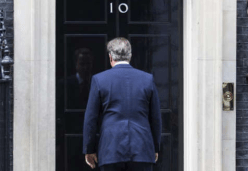
David Cameron steps back into Number 10 humming a tune.
I wanted to pause a moment and reflect, before the history books start to be written, before the entry which ends with ‘succeeded by Teresa May’ is written as if this happened as naturally as night follows day, to assess David Cameron’s contribution, his legacy. It’s all been said before, nothing new here, but I wanted to collect some of it together, before we all move on and forgot some of it. How bad it was.
He walks away with a little hum, and a ‘right, yes’, saying he’s going to leave ‘the s***’ he’s just navigated us all into to others to sort. It’s a day at the office for him, another day. Sometimes it’s been like a game for him and his chums (they are all ‘chums’ in the Tory party, apparently, when they are not stabbing each other in the back in the scramble for power). Nick Robinson compared it to Game of Thrones, and he should know because he was a close friend of all the Bullingdon boys. Nick could have been there sharing all that power with them if he wasn’t busy producing a stream of right-wing propaganda for the national news organisation which helps keeps them in power. He helps to share the power in his own way, by stifling other views.
It has been a series of days in the office. But it’s really been all about power. Sadly that job, that office Cameron has held has had the capacity to effect people’s lives. With the potential to harm them. And that Cameron seemed to enjoy. Or was it just collateral damage? What kind of man pursues austerity so that people who work long hours caring for the sick, disabled and disadvantaged can barely afford to feed themselves? And does this whilst diverting money to the rich in the form of tax breaks and bonuses for bankers? What kind of man has a disabled child and loses that child, (a tragedy that would ruin many people’s lives for ever), but then goes on to demonise the sick and disabled? Who refuses to help children escaping war who then drown in the sea, who sells off the profitable bits of the NHS and lets the rest rot away for lack of investment, and sanctions a system which classifies people with terminal illnesses as ‘fit to work’ so that the money they rely on for food can be reduced? What kind of person can do that, having had that tragedy happen to their family, even for power? Is there no conscience there? Just does it and then dismisses it all with a Pooh hum.
But there is more, lots more. Letting racism, intolerance and hatred breed, and pretending it’s nothing to do with you. But then acknowledging it, because it is part of people’s ‘legitimate concerns’ and moving your stance ever further towards more intolerance, more hatred, more dislike of anyone who exhibits any difference to your tribe. Drip-feeding this hatred through the media, watching a party form to exploit this directly and split the vote against you so that you can hold ever more tightly onto power. This after you have destroyed a liberal (‘Lib-Dem’) party with a great tradition of opposing such reactionary forces, destroying it by bribery and two-facedness, offering a bit of that treacherous power to a man gullible enough to take the offer, and then destroying him and that liberal tradition and that party without mercy. Clearing the field so that you can have a stronger hold on that power.
Then when you’re close to the end, when you think you might be getting bored of these days in the office, when the game is getting a bit tiresome, thinking you might have a final fling. Seeing if you can finish off a rivalry you started at university, when you were both in a club where drinking and destroying things whilst drunk was the prime directive. The stakes are a bit higher now, but you’ve got that party of hatred willing to help you split opinion and pour more hatred on to fan the flames against Europe. That’ll make this game more interesting. And yes, the old mate takes the bait, because you all love the prospect of power nearly as much as the realisation of it. And the press will help with more lies and hatred, and you know the left-wingers will struggle with their principles to know where to place themselves, and their discomfort adds to your pleasure. And gives your party a stronger hold on power.
It all goes pear-shaped in the end, but what the hell. Old rival doesn’t know how to deal with getting what he pretended to want, but no matter because you have a party full of people who’ve learned at your feet how to be even more greedy for power than you are. So you can go off with your ‘Ho-hum’ in less than three weeks. And it was a breeze really. There was the odd tedious day at the office. But overall, you and Gideon seemed to be having a good time. PMQs was, I think, for you one of the best bits – all that rowdy sexism, bullying, personal abuse – just like being back in the Oxford Union. The photos of you ‘having a laugh’ there say it all really. And the lucrative and very easy after-dinner speaker circuit awaits. More privileged drinking clubs. So you’ll never have to worry about money. Thousands of other families will, including those with disabled children, directly because of what you did. But not you, so that’s OK.
I’ll stop there. As he does. Retire gracefully. No longer pumped up for the fight. It’ll probably get worse for us all before it gets better. But I for one am glad the game is largely over for him. I hope he has days of regret, of conscience, in the time left to him. I hope occasionally he thinks of those other families, and wonders whether it was all worth it. When he is old and his health fails, and he starts to become like those he despised and tried to get us all to hate. I hope he wonders if it was worth it. For the power, the very brief and fleeting power, it doesn’t last. But the damage does.
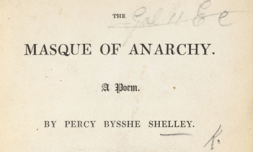 The anniversary of two events of primary importance in our radical history occur in August; the birth of poet Percy Bysshe Shelley on the 4th (in 1792) and the Peterloo Massacre in Manchester, England on the 16th (in 1819). Last week my thoughts Shelley’s great Poetical Essay on the State of Things was published on


 New Leveller