Kings are but giants because we kneel, one leap and up go we!
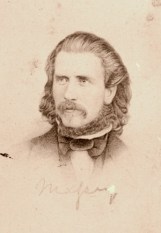
Percy Bysshe Shelley presents the British establishment with a conundrum. While acknowledging him as one of Britain’s greatest poets his reputation must be carefully marshalled to hide the devastating commentary he delivered on political and social conditions (as Graham Henderson points out here). For Shelley’s radical successors the situation is simpler – just pretend that they never existed. Such a poet was Chartist Gerald Massey born 1828 in Hertfordshire.
‘A strong feeling against the British aristocracy….’
The titles of some of Massey’s poems such as The Red Republican (also the name of a publication) and The Last of the Queens and the Kings leave us in no doubt of his aims. Shelley had died in Italy in 1822 (at the tragically young age of 29), well before the rise of Chartist activity from the mid-1830s. But being born almost 40 years later, much of Massey’s work is placed firmly in the cauldron of that political and social movement, with his early poems published from the mid-1840s onwards. The penalties for such activity could be severe, the Treason Felony Act being passed by Parliament in 1848 with the express purpose of increasing the chances of a guilty verdict being delivered against those tried for advocating the abolition of the monarchy. A long prison term or transportation to Australia was a real possibility!
Massey came from impoverished beginnings and a scant education in a ‘penny-school’ meant that he was virtually an autodidact. He was to engage in a wide range of literary activities aside from poetry including journalism, theology, histotian and criticism. But just as with Shelley my aim is not to analyze his work as an academic exercise but to consider what insights his work holds for radicals and republicans today. The great American poet and essayist Walt Whitman was in no doubt about the aims of Massey’s poetry when in 1855 he observed:
I have looked over Gerald Massey’s Poems ― They seem to me zealous, candid, warlike, ― intended, as they surely are, to get up a strong feeling against the British aristocracy both in their social and governmental political capacity.
‘Put no faith in kings, nor merchant-princes trust’
In this short post it is not possible to do justice to the whole of Massey’s substantial output so I shall focus on just three of Massey’s poems Progress and Tradition, Things Will Go Better Yet and Kings are but Giants Because we Kneel from which the following is the opening stanza:
Good People, put no faith in kings, nor merchant-princes trust,
Who grind your hearts in mammon’s press, your faces in the
dust,
Trust to your own stout hearts to break the Tyrant’s dark, dark
ban,
If yet one spark of freedom lives, let man be true to man,
We’ll never fight again, boys, with Yankee, Pole, and Russ,
We love the French as brothers, and Frenchmen too, love us!
But we’ll join to crush those fiends who kill all love and liberty,
Kings are but giants because we kneel, one leap and up go we.
We can learn much from this verse alone. The themes are similar to those which exercised Shelley, the people are good and monarchs are not worthy of trust. The term merchant-princes is telling and points to the autocratic nature of mid-Victorian trading companies with their lack of accountability and democratic control. This was the era when the activities of the British East India Company (EIC) were finally being acknowledged as a danger to even the British government (it was nationalised in 1858 and finally dissolved in 1874). As I mentioned in this post the EIC was an effective forerunner and model for many of todays multinational Corporations who present such a danger to us. In the far less deferential 21st century, however, even the eager consumers of the products of corporations such as Microsoft and Apple would regard trusting those organisations as a little naive! Massey’s work is essentially internationalist in tone reflecting Tom Paine’s sentiment in his comment My country is the world which was to find expression in the realisation of the proto-socialist movements in the 1820s and 1830s that the problems faced by the people had a commonality throughout Europe.
Continue reading “Zealous & Candid; The Powerful Poetry of Republican Chartist Gerald Massey”
 Fake news is often presented to us as being a new development. but in fact the phenomenon has been around for a long time (so false information about fake news!). It is only the source and speed of media dissemination which has altered. So why is it a problem and why should we worry about it now?
 It has been a long time since British politics was in such a confusing state. The old certainties have collapsed and there is doubt whether Labour really represents working people or that the Conservatives represent traditional shire interests. So it is perhaps unsurprising that the most hotly contested political events in recent years have been the Scottish and EU referendums with their simple straightforward choice, Yes or No, In or Out. But with the ascendancy of right-wing libertarianism allied to an aggressive alt-right populism, it is understandable that opposition parties should rethink their strategy.
 New Leveller